
Arrest Warrants in Summit County
An arrest warrant is a judge's order letting law enforcement take a named person into custody. In Summit County, the case may sit in District Court, County Court, or a municipal court, depending on the offense and where it falls. Two files exist here. The court file and the law-enforcement file are related, but they are not the same thing, and one will not answer for the other. The practical path beats the instant one. Pull out any summons, notice, or old paperwork and read it for the court name and case number. The state docket can locate a state case, but only the issuing clerk can confirm the warrant itself. Municipal cases must go to the named town court directly. A third-party list or an old docket entry is no way to judge current status.
No Summit County Arrest Warrant Portal
The Summit County Sheriff posts no name-search warrant page and no county active-warrant roster, and Colorado offers no public statewide warrant lookup. CCIC, NCIC, and similar systems are working law-enforcement networks, not self-search tools for the public. Keep one thing straight. A search gap like this is not evidence that no warrant exists.
A blank result can happen for many reasons. The wrong court, a spelling variation, a municipal case, a short date range, or restricted records can all hide an entry in Summit County. All a public search can honestly say is that nothing appeared under the filters used.
What a Summit County Arrest Warrant Contains
Summit County publishes no official sample arrest warrant to copy here. When a record is released, it may hold fields like names, case number, charge, and issuing judge, though what you get depends on the custodian, sealing, execution, juvenile protections, and court orders.
| Case reference | An anonymized example such as 2026-CR-#####, not a live person's file. |
|---|---|
| Named subject | Identifying information used by officials; private examples are not republished. |
| Alleged offense | The statute or charge category supporting the proceeding. |
| Issuing authority | The district, county, or municipal court and judicial officer. |
| Issue date | The date of the order, which may be followed by later action. |
| Bond or appearance | Terms shown by the court, subject to current confirmation. |
| Execution status | Whether service or another disposition is officially recorded. |
Summit County Arrest Warrant Docket Signals
The Colorado Judicial docket lets you filter by district, county, courthouse, court type, division, date, case number, party, and attorney. A date filter plus at least one other filter is required. Pick the Fifth Judicial District and Summit County, then search with a known case number or appearance date range when you have one.
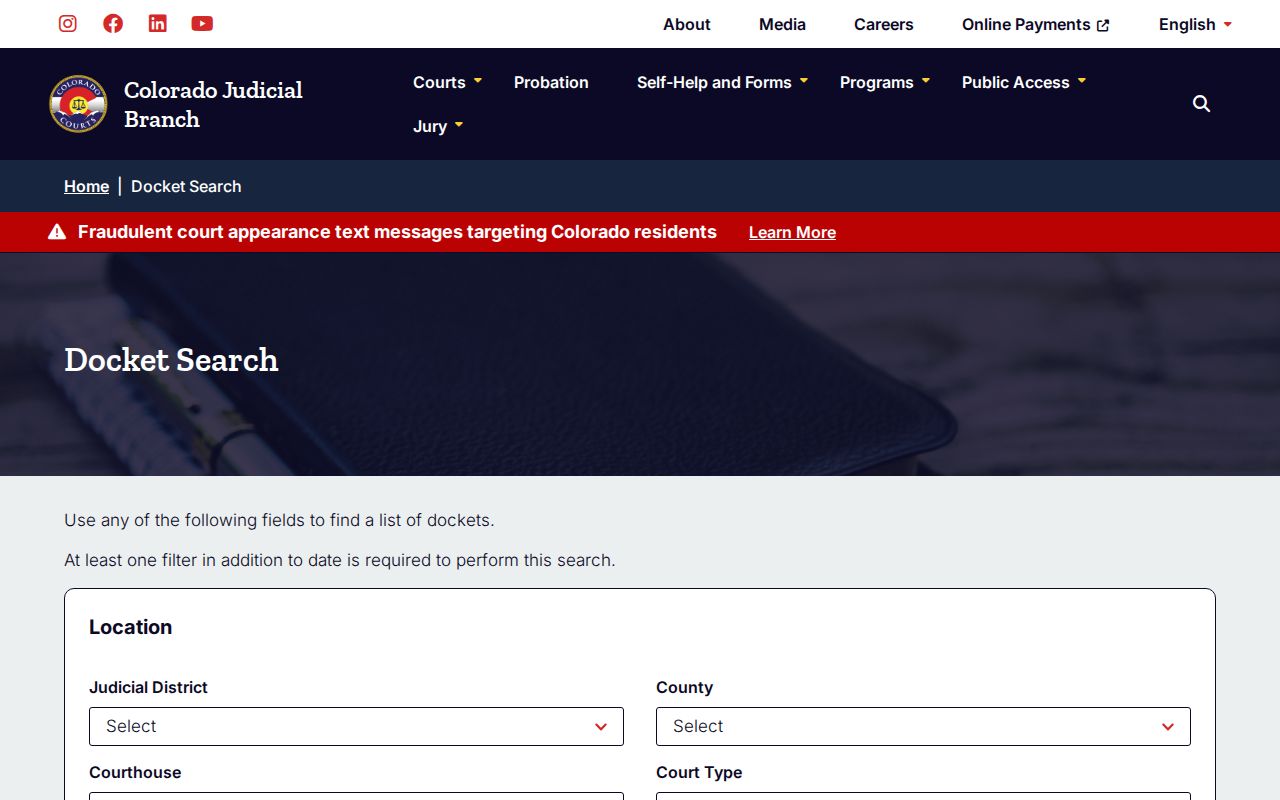
A docket entry may carry a hearing label such as “Appearance on Arrest Warrant.” That label marks a docket event, not proof of a live warrant. It can point to a past hearing or a future one without showing the current order. For confirmation, call Summit Combined Courts at 970-453-2272.
How Summit County Arrest Warrants Are Served
In Summit County, the Sheriff's Office and municipal police each serve court orders within their lawful roles, and an agency can execute a warrant it encounters through ordinary police work. The Sheriff also runs detention services. No separate constable layer exists here, and no office publishes a public schedule for warrant service. After an arrest, booking, a court appearance, bond review, or other case steps follow under the order and current law. The Sheriff publishes no complete bond-window schedule or universal surrender time. So do not show up on the word of a web post. Call the issuing court first, and where it matters, the Sheriff or a lawyer, before you act.
Summit County Arrest Warrant Custodians
What you want determines who holds it. Summit Combined Courts keeps state dockets, orders, filings, and judicial records, while each municipal court keeps its own ordinance cases. The Sheriff or a city police department may hold reports, booking material, citations, photographs, or video. The District Attorney may hold certain arrest reports after referral.
Summit Combined Courts
501 N. Park Avenue, Breckenridge; 970-453-2272; 5thJDclerks@judicial.state.co.us. Ask about the division, current court status, and the proper record form.
Summit County Sheriff
501 N. Park Avenue; office 970-453-2232; non-emergency 970-668-8600. Use this office for agency records or detention routing, not as a substitute for the issuing court.
Arrest Warrant vs Summons vs Bench Warrant
These three tools do different jobs. An arrest warrant authorizes custody in a criminal proceeding. A summons orders a person to appear, without custody first. A bench warrant usually follows a missed appearance or another court obligation in Summit County. The issuing court controls the response in every case.
| Point | Arrest Warrant | Summons | Bench Warrant |
|---|---|---|---|
| Direction | Authorizes arrest | Orders appearance | Authorizes custody after a court trigger |
| Typical basis | Criminal process | Charge with a set date | Failure to appear or comply |
| Issuer | Judge or court | Court or authorized officer | Judge |
| Response | Confirm and arrange through court or counsel | Appear as directed | Ask issuing court about appearance, bond, recall, or quash |
Summit County Arrest Warrant Affidavit Access
A warrant is one thing; the affidavit behind it is another. Under Colorado Judicial Administrative Order 1996-03, affidavits for arrest or search warrants stay closed until the arrest or search has been executed, and nondisclosure can continue for good cause even afterward. A public docket event does not override that rule. Ask the Summit County court records office for the exact item: docket entry, warrant order, executed return, or affidavit. A denial or redaction may come from sealing, privilege, an active investigation, juvenile law, confidentiality, or another court order. If access is limited, ask the custodian for the legal basis and whether any portion can be released. The official Colorado court document form shows how a requester names the county, case type, filing year, party, and desired document.
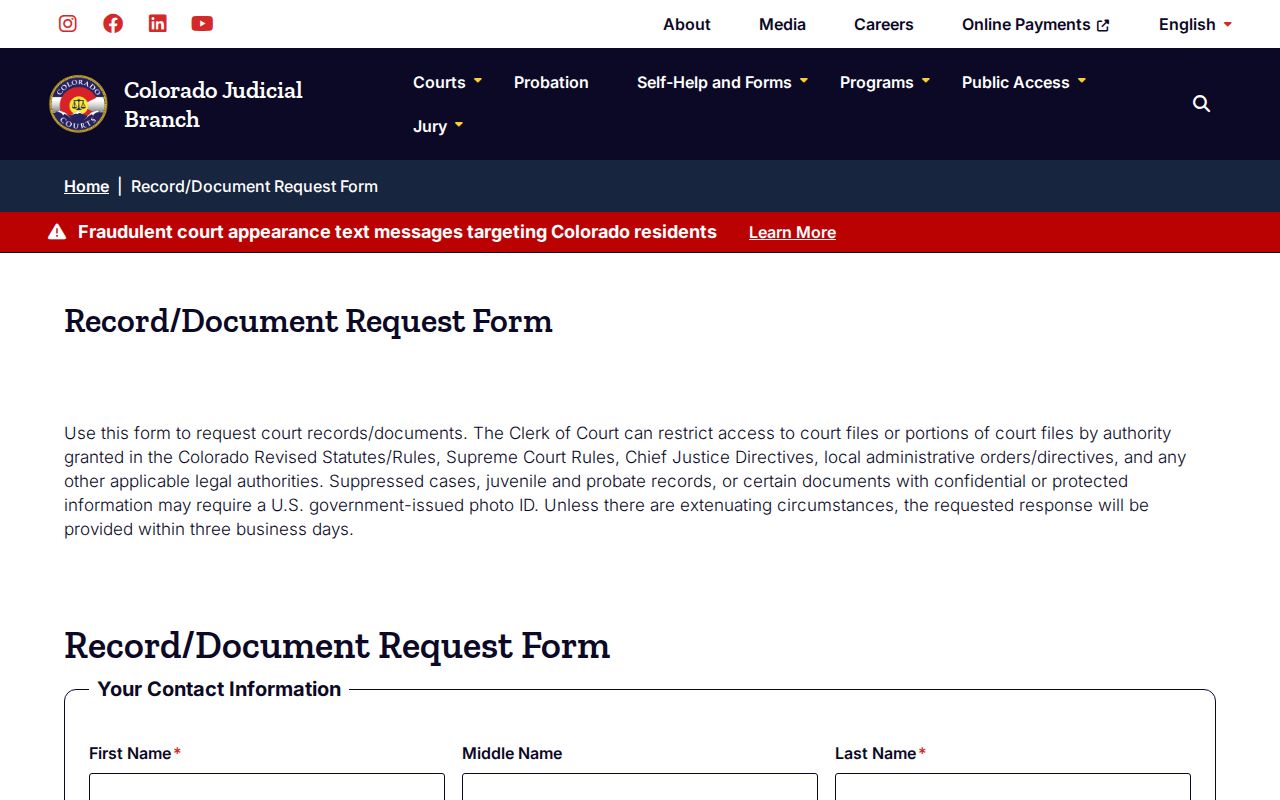
The form may ask for contact details and identification when the material is protected. Filing it starts a staff review, not an instant lookup, and the Summit County instructions allow 3 to 5 business days. Keep the request narrow. Name one document category and the known case reference rather than asking for all warrant material at once.
Summit County Report and Booking Requests
The Summit County Sheriff records page takes requests for criminal reports, booking reports, traffic files, citations, photos, and recordings. A technician decides what can be released and sets the fees. Some material gets withheld or redacted. The form asks for incident details, your contact information, a delivery choice, identification, a signature, and a pecuniary-gain statement. What the page itself shows is the request process and its requirements.
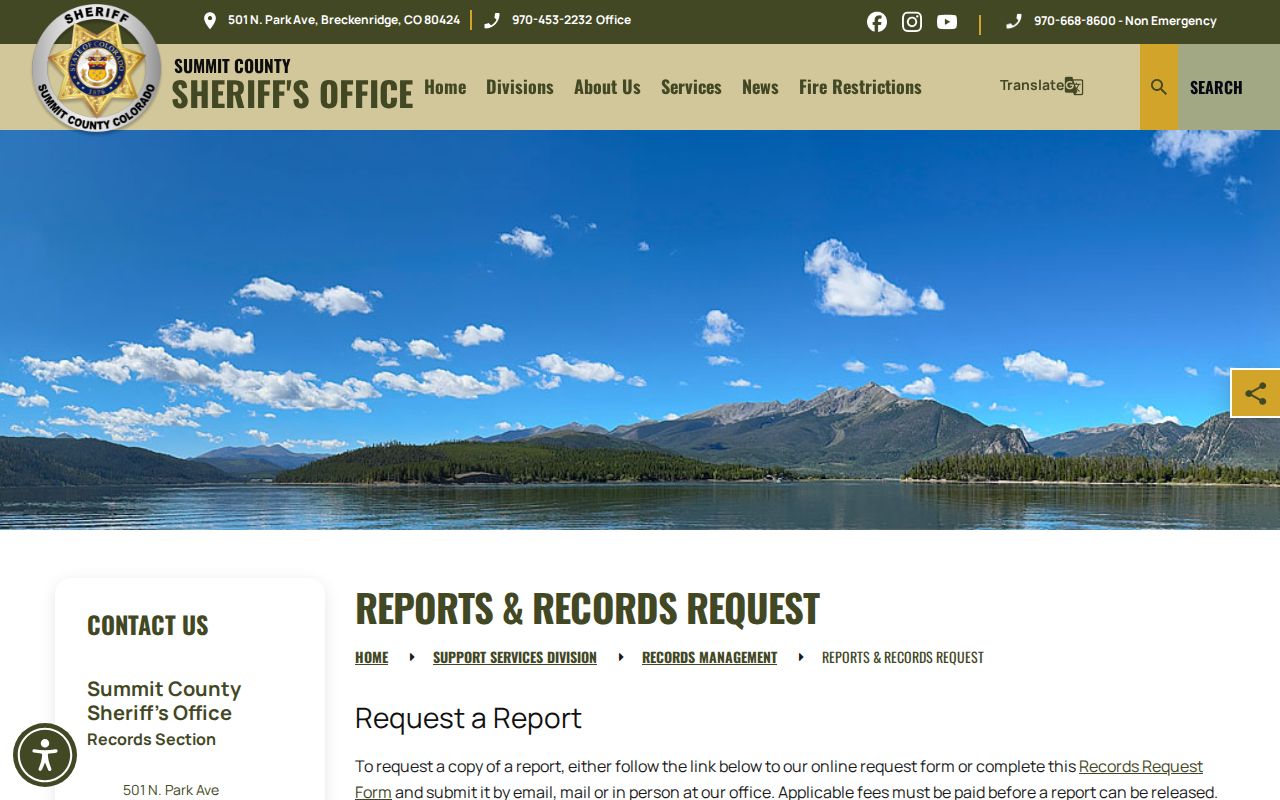
Routine reports often open up within 72 hours of an event, weekends and restrictions aside. Complex work may take the full statutory response period instead. Keep in mind what this is. A records request pulls a document from the Summit County Sheriff's file. It does not give live warrant status, and it cannot recall or clear a court order.
What to Do If There's a Warrant for You
Start by finding the issuing court and getting a current confirmation of the warrant. Summit Combined Courts handles the state district and county cases. The municipal side is split among several clerks. Breckenridge Municipal Court answers at 970-547-3127; the Silverthorne/Dillon/Keystone combined clerk at 970-262-7304; Frisco at 970-668-3579 or 970-668-3025; and Blue River Town Hall, at 970-547-0545, can point you to its current municipal custodian. Once you reach the right court, ask whether the matter needs an appearance, a bond, a scheduled surrender, a motion, or some other step. Procedures one town publishes for its municipal warrant do not carry over to a different court, so follow the court that issued yours. A Colorado defense attorney or an appointed-counsel office can lay out your legal choices. For the broader routing map, see the Summit County warrant records overview.
Important: Confirm current instructions with the issuing court and speak with counsel before arranging surrender, bond, or any appearance on an arrest warrant.
Federal Arrest Warrants Near Summit County
Federal process runs on a completely separate track. Summit County sits inside the federal District of Colorado. PACER is the official federal docket service, but it is not a complete public warrant database. Sealed complaints, affidavits, and warrants may not show up there at all. The U.S. Marshals Service handles federal service and fugitive operations. It offers no complete public self-search list either. A Summit municipal court, the state docket, or a local Sheriff page also cannot clear a federal warrant. Take federal questions to the U.S. District Court for the District of Colorado, federal counsel or a defender, or the right federal agency. Summit County has no public federal warrant roster of its own.
Verify Summit County Arrest Warrant Records
Stick to official domains and published phone numbers. The Colorado Judicial Branch warns about fraudulent court communications, so check any unsolicited demand for money, identity documents, or urgent payment against the court's official contact. Save the source URL, the date you checked, your docket filters, the case reference, and the clerk's response. Do not republish private identifiers. A public warrant record may be incomplete or out of date, and only the issuing court can confirm its present judicial status. An arrest warrant marks process, not a verdict. Call 911 for emergencies; for non-emergencies, use the official Summit dispatch channel. For anything else on Summit County warrant records, verification goes through the court that issued the order.
Sources were researched September 8, 2026; confirm present status, hours, access rules, and court instructions before relying on them.